Middlesex Canal Dam and Locks
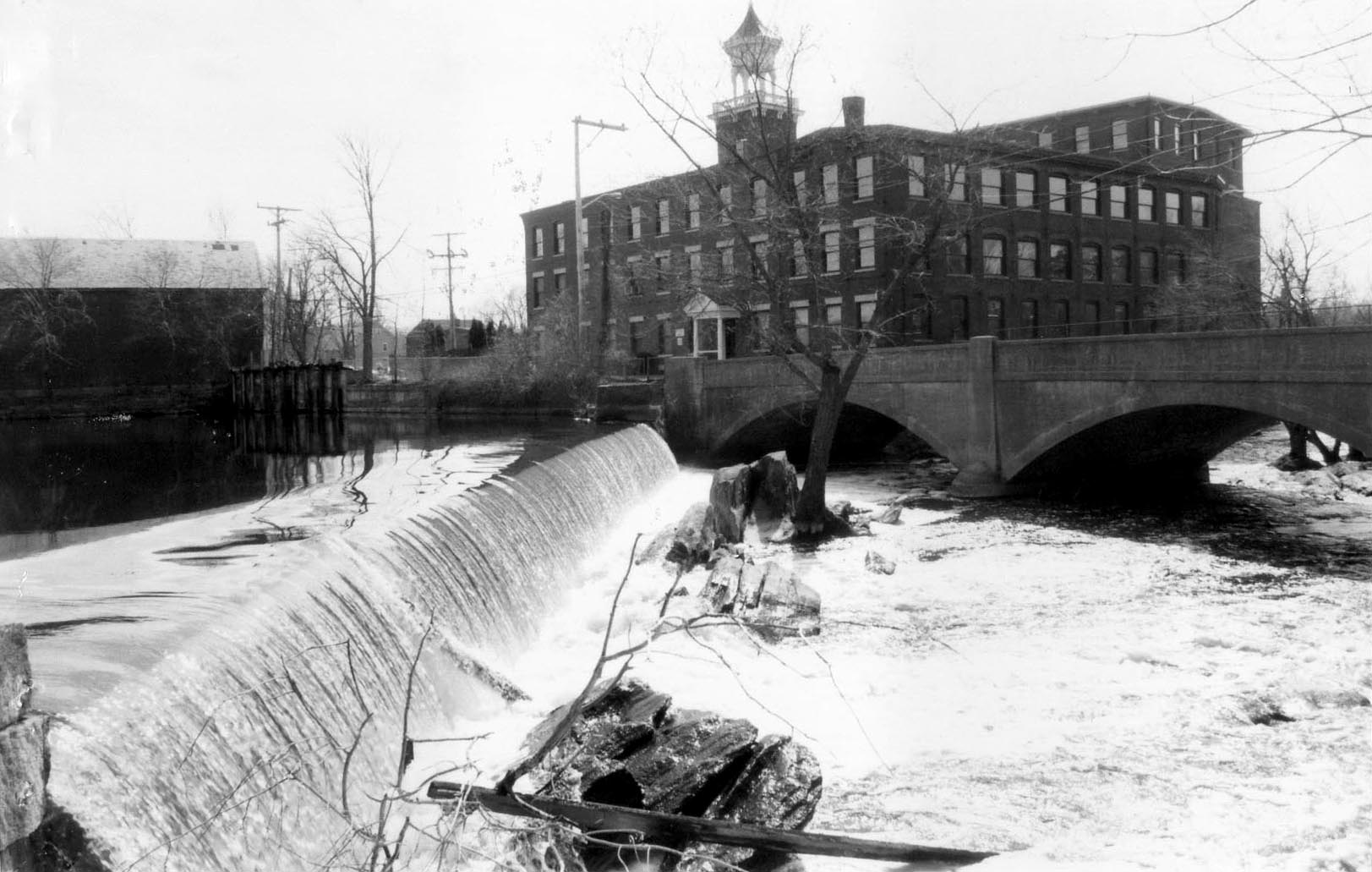
In 1708, Christopher Osgood received a land grant of approximately 40 acres on the west bank of the Concord River in Billerica. In return, he committed to constructing a milldam to provide power for a grist mill, which would grind grain for the local citizens. By 1711, the dam was completed, and the mill was operational. Roger Toothaker, owning land opposite the dam, was the first to receive relief from flowage, obtaining land in another section of the town. However, farmers upstream in Concord and Sudbury faced challenges as attempts to remove the dam through legal actions failed.
The original milldam, strategically navigating natural obstacles, facilitated Osgood's expansion to include a sawmill. William Chandler's attempt to establish a nearby fulling mill, though, proved unsuccessful. After Osgood's death in 1739, various enterprises emerged along the riverbanks. The mill privilege was eventually sold and divided. By 1784, entrepreneur Thomas Richardson had consolidated most of the privilege, selling it, along with the dam and water rights, to the Middlesex Canal Proprietors in 1794. These rights were crucial for the Canal Company, using the dam to divert Concord River waters into the Canal.
In 1798, Osgood's dam faced issues, prompting the Proprietors, led by engineer Loammi Baldwin, to construct a new wooden box dam filled and tightened with gravel. By 1828, this structure proved inadequate, leading to the construction of a masonry dam that largely remains today. With the rise of the railroad, the Canal Company began to decline. In 1851, the Talbot brothers acquired the property and mill privilege, successfully defending their right to maintain the dam against upstream farmers. Despite initial doubts, the Talbots established the Faulkner Woolen Mills and Talbot Woolen Mills, dominating North Billerica until the mid-20th century. The Town revoked the obligation to grind grain in 1864.
In the 1960s, CRT Corporation purchased the Talbot property, currently holding the mill privilege and maintaining the dam. The mill buildings are now subdivided and tenant-occupied, while the Faulkner Mills on the opposite shore closed in the 1980s, with the buildings currently vacant.